Hair Transplantation with Follicular Unit Transplantation Method?
Hair transplantation with the FUT method, also known as the hair peeling method, is a technique developed in the early 1990s and is the first definitive solution for alopecia. The possibilities offered by the FUT-Strip hair transplantation method, when combined with high-level surgical skills, aesthetic perception and experience, can be a completely natural result of high quality and aesthetics. FUT hair transplantation technique is performed by taking hair follicles in bulk from fixed hair, that is, from the back and sides of the head, and transplanting them to the thinning area.
How is Hair Transplantation Done with FUT (Follicular Unit Transplantation)?
The design of the skin strip to be taken as an implant is usually 1.2 cm thick in order to avoid difficulty in closing the wound and creating as much post-operative scar as possible. Note that the graft is usually taken from the occipital region of the head and extends from one ear flap to the other.
- Local anesthesia is applied along the implant strip.
- An incision is made in the subcutaneous fat and the graft strip is separated from the subcutaneous fat with a scalpel. At this point,careful hemostasis must be performed since there are many vessels and there is a risk of postoperative hematoma.
- The wound is stapled in layers with subcutaneous, absorbable stitches. In recent years, the scar is stitched in such a way that hair grows out of the scar, thus making it less noticeable.
- The gradually cut graft strip is processed to produce suitable smaller diameter cuts.
- The isolated hair follicles are placed on the affected area where scalpel or needle holes are opened.
What are the Results of Hair Transplantation with FUT?
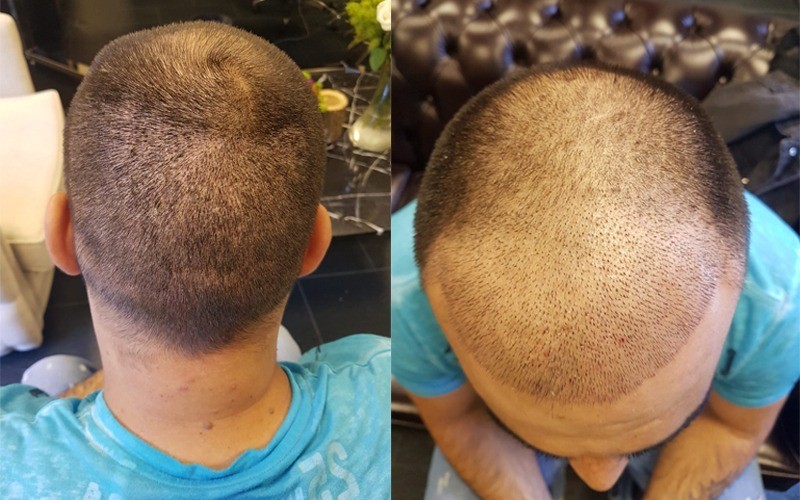
The effects of FUT hair transplantation depend primarily on the skill and experience of the surgical group and can be excellent, at least in terms of intensity. New hair grows naturally from the moment it is transplanted, and the first results appear within 3-5 months and are completed after 10 months. It is important to emphasize that usually a significant part of the transplanted hair gradually falls out after surgery, but this phenomenon is considered quite normal, since new hair grows in its place. The transplanted hair grows like the rest of the hair and remains permanent. They wrinkle, tear, comb, tolerate all kinds of hairdressing procedures and are no different from other hair.
How to Remove Scars After Hair Transplantation?
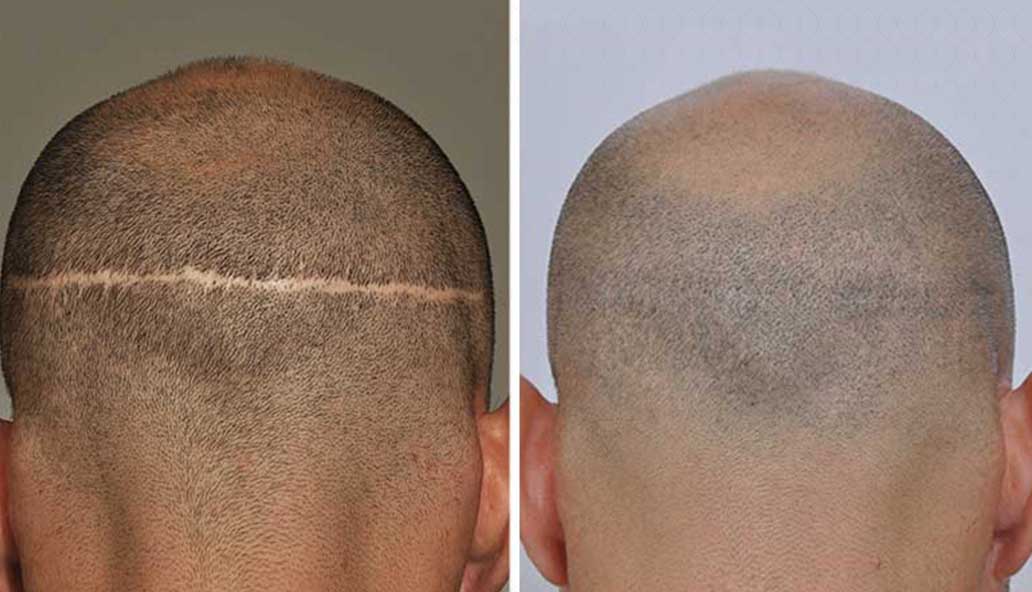
The FUT-strip hair transplantation technique is an older method of hair transplantation that tends to shrink over time. The main reason why more people prefer FUE to the FUT-strip method is that the latter leaves a scar in the graft area. It is estimated that the majority of patients who visit a plastic surgeon do so because of uncomfortable, unsightly scars at the donor site. This rate tends to reach approximately 30% of patients.
Restoration of scars after the FUT-strip method is an extremely difficult and laborious procedure that should only be performed by a plastic surgeon specialized in scar removal, as in the Dermatology and Cosmetics Laboratory. There are three methods of removing scars after hair transplantation with the FUT-strip technique:
Plastic Surgery with W-plasty method
In the first stage of this method, the old scar is created in the form of W-plasty with FUT-strip hair transplantation. The plastic surgeon then manipulates the wound appropriately and stitches the wound in layers from depth to surface using a special technique called trichophytic closure.
This technique is ideal for cases of medium to large scars, provided there is sufficient elasticity in the healthy skin surrounding the wound. After scar restoration and 8 to 12 months after surgery, the final result becomes apparent, which translates into a significant reduction of up to 80% in the width of the scar, making the scar almost invisible.
In some cases, after plastic surgery with the W-plasty method, hair follicles are transplanted to the affected area with the FUE method to obtain even better aesthetic results.